Our minds are constantly buzzing with thoughts. Some we consciously direct, and others seem to pop up without warning.
But how do we differentiate between the two, and why does it matter?
Understanding the difference between intentional thoughts and automatic thoughts can be really powerful for improving our mental well-being, boosting productivity, and even transforming the way we interact with the world around us.
Let’s discuss.
Intentional Thoughts vs. Automatic Thoughts
What are Intentional Thoughts?
Intentional thoughts are deliberate, conscious, and purposeful.
These are the thoughts that we actively choose to focus on. Whether you’re planning your day, problem-solving, or setting goals, these thoughts are the result of your active engagement with your mind. They require effort, attention, and a clear intention behind them.
These are thoughts such as deciding to focus on a specific task at work, visualizing success before a big presentation, or simply reflecting on your personal values and what they mean to you.
Intentional thinking is typically aligned with your goals and desires. It’s rooted in mindfulness and self-awareness, meaning you ‘re fully present and aware of the thoughts you’re cultivating. It requires practice, but it also allows you to have greater control over your mental and emotional state.
What are Automatic Thoughts?
Automatic thoughts, on the other hand, arise spontaneously.
These are often unconscious and can happen without any clear effort or intention. They can be influenced by past experiences, habits, biases, or even biological factors. They are the brain’s way of processing information quickly and efficiently, but they can also be influenced by negative patterns or cognitive distortions.
These can include thinking “I’m going to fail” before an important task, even if there’s no immediate evidence for it. You may get a thought quickly assuming someone is upset with you based on a vague facial expression. Or maybe you’ve experienced feelings of hopelessness without any specific cause apparent.
Automatic thoughts are typically fast and reactive. They can be positive or negative, but when they are negative, they can lead to feelings of anxiety, depression, or self-doubt. Unfortunately, we don’t always have control over these thoughts, especially if they’ve become ingrained patterns over time.
The Impact of Automatic Thoughts on Mental Health
While automatic thoughts are a normal part of the human experience, they can sometimes become problematic, especially when negative or irrational. If you constantly find yourself having automatic thoughts that are self-critical or anxious, they can snowball into bigger issues like low self-esteem, stress, or depression.

The Benefits of Intentional Thinking
While automatic thoughts may be hard to control, intentional thoughts are where you can make a real difference. The key benefit of intentional thinking is that it allows you to guide your mind toward positive outcomes. Here are a few of the many advantages:
Increased Emotional Control: By being more mindful of the thoughts you choose to focus on, you can reduce the impact of negative automatic thoughts. You can replace anxious or self-critical thoughts with more compassionate and empowering ones.
Improved Decision Making: Intentional thoughts allow you to consider various perspectives, make informed decisions, and actively work toward your goals. Rather than simply reacting to life’s challenges, you can approach them with clarity and purpose.
Better Relationships: By practicing intentional thinking, you’re more likely to respond thoughtfully rather than react impulsively to others. This leads to more meaningful interactions and a deeper understanding of yourself and those around you.
Enhanced Focus: Focusing on intentional thoughts helps improve concentration and performance. By actively choosing what to think about, you’re less likely to be distracted by the constant flow of random, automatic thoughts.
How to Cultivate Intentional Thinking
So how can we cultivate more intentional thinking in our lives? Consider these strategies to get started:
Question Negative Automatic Thoughts: When you catch yourself having a negative automatic thought, pause and challenge it. Ask yourself, “Is this thought based on facts? Is there another way to look at this situation?”
Set Intentions for the Day: Each morning, take a few minutes to set an intention for your day. This can be a positive affirmation or a specific goal. Setting a clear intention helps prime your mind to focus on what truly matters.
Practice Mindfulness Meditation: Mindfulness teaches you to observe your thoughts without judgment, creating a space between yourself and your automatic thoughts. With time, you’ll be able to notice and redirect your thoughts more effectively.
Use Thought Re-framing Techniques: Re-framing is the process of changing the way you interpret situations. For example, if you have the automatic thought, “I’ll never be able to do this,” you could re-frame it to “This is a challenge, but I can break it down and tackle it one step at a time.”

Final Thoughts
This is a topic that has interested me a lot lately. I’ve tried some of the simple sounding techniques above, and in my opinion they really do actually help.
While we can’t always control our automatic thoughts, we can definitely work on cultivating more intentional thoughts.
Start with identifying and challenging your automatic thoughts. Then try re-framing your negative thinking patterns and replace them with more realistic and balanced thoughts.
By becoming more aware of the thoughts we choose to focus on, we can increase our emotional well-being, improve our decision-making, and live a better life.
Our thoughts are so powerful. By being intentional about the ones we give energy to, we can shift the direction of our life.
Thanks for reading, please comment or follow the links.
Visit the Happy Hub Etsy Shop.
Please visit and follow Happy Hub’s Instagram page.
Visit the Happy Hub YouTube Channel.
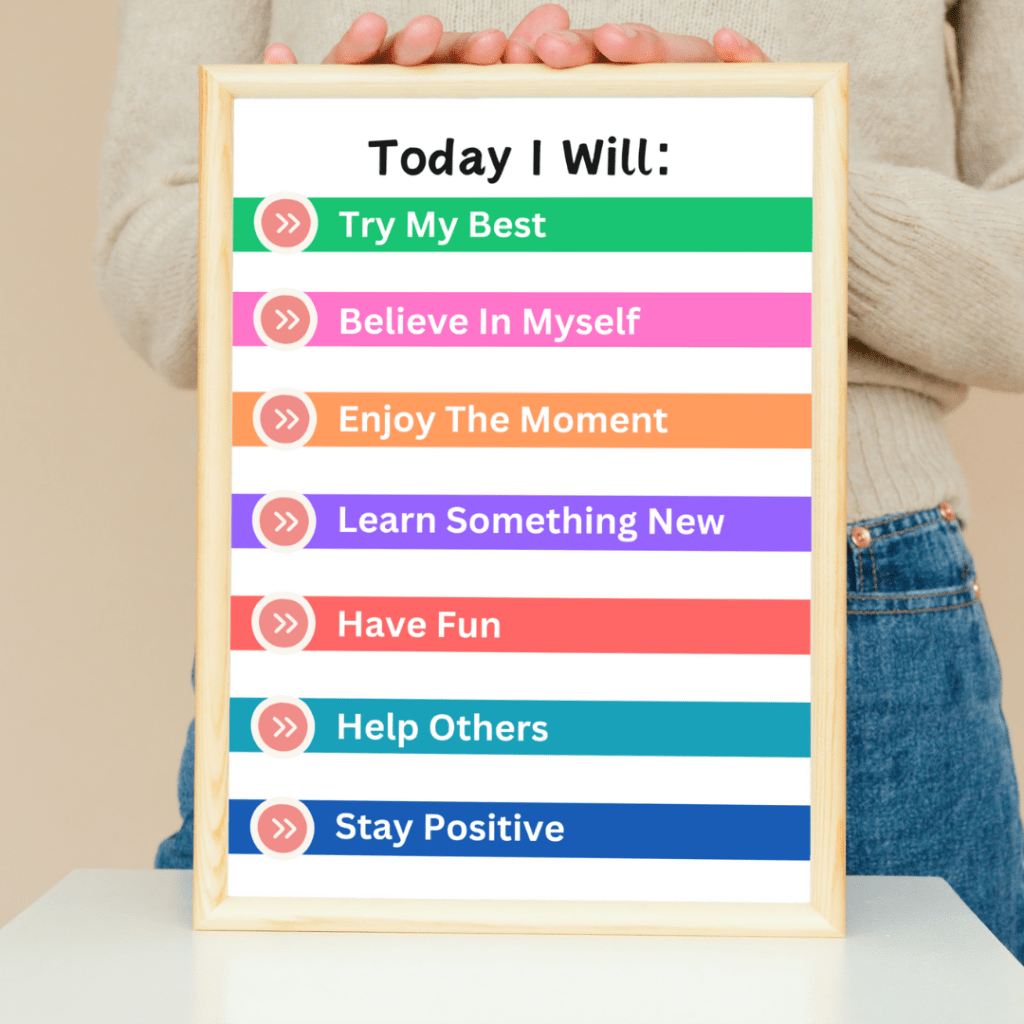
Check out our Daily Affirmations Printable Poster:

Check out our other Daily Affirmations Printable Poster:
 Happy Hub
I didn’t know so much about international thoughts or atomic thoughts before your blog. Well shared 💐
LikeLiked by 1 person
Thank you! appreciate it 🙂
LikeLike
I particularly appreciate the practical strategies for cultivating intentional thinking. Very nice piece.
LikeLiked by 1 person
No problem, thanks a lot. Wanted to let you know, I can’t access your site through wordpress. Maybe you can replay with your external link here, or maybe you know why and can advise? 🙂
LikeLike
Really great post. From my experience, questioning negative thoughts helps so much because a lot of them are very irrational.
LikeLiked by 1 person
Thank you… exactly, it’s so true..
LikeLiked by 1 person
I’m a therapist and currently working on a new site to better connect with clients and share resources.
LikeLiked by 1 person
My pleasure.
LikeLiked by 1 person
I look forward to visiting your new site in the future.
LikeLiked by 1 person
LikeLiked by 1 person
Very nice, I bookmarked it, thanks.
LikeLiked by 1 person
Thanks
LikeLike
This is a great post. The difference between intentional and automatic thoughts is obvious and yet I have not paid attention to it before. I think the advice in this post is great.
LikeLiked by 1 person
It really is worth considering, thanks a lot.
LikeLiked by 1 person