Microgreens are among the simplest, smallest, and yet most nutritious and delicious plants you can grow both outside in the garden and indoors.
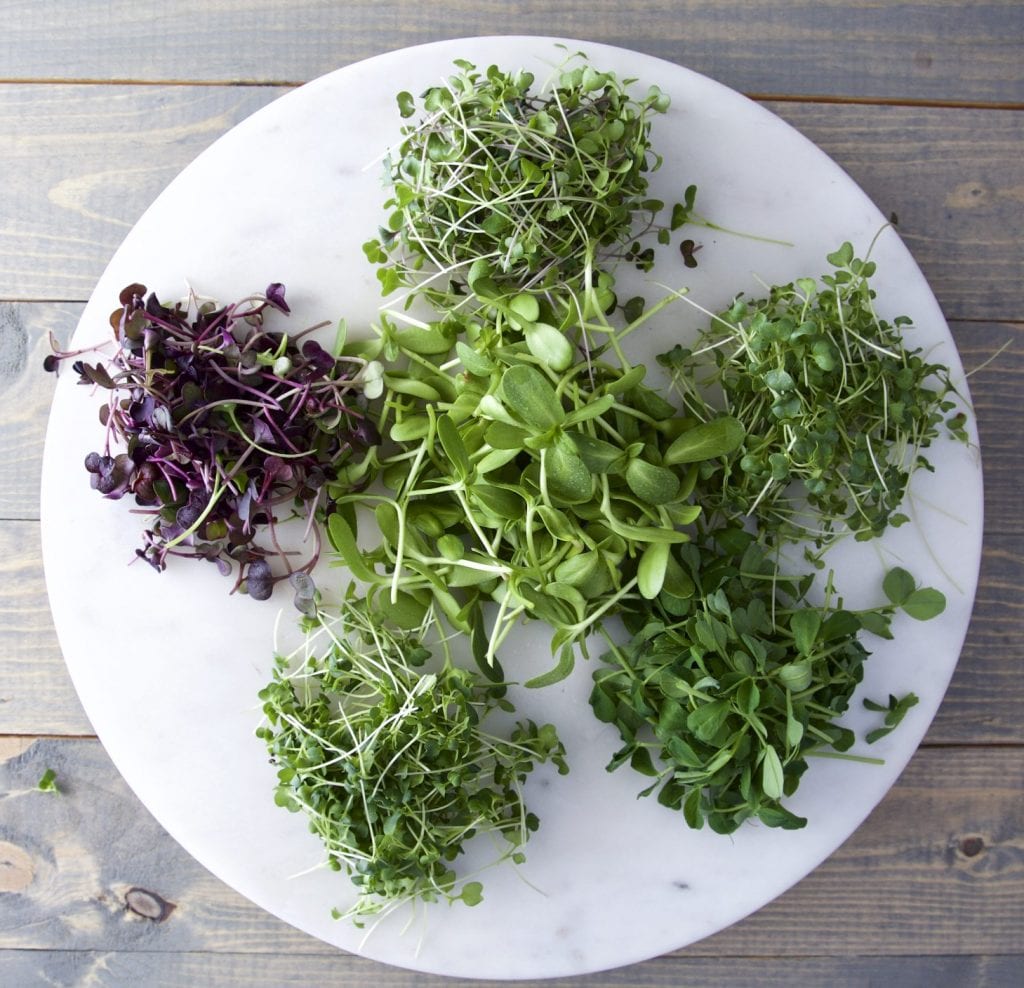
Microgreens are the shoots and seedlings of young salad vegetables such as arugula, Swiss chard, mustard, beetroot, among others, picked just after the first leaves have developed.
There are several rewarding aspects to starting these quick-growing plants for yourself, but maybe the best thing about microgreens is how easy they are to grow at home.
Let’s look at some of the health benefits of microgreens, how to add them to our diet, and how to grow them.
Learning About Microgreens
What’s the Point of Eating Microgreens?
Different types of microgreens give you different vitamins, minerals and nutrients. In general, microgreens are a great source of vitamin A, E, C and K, and minerals such as calcium, magnesium, iron, selenium, and zinc.
The tiny leaves of most of the microgreens are ready for harvest in 12 to 14 days and are packed with nutrition and intense flavours imitating their mature counterparts. For example, if you’re eating the microgreen shoots of radish, the taste and flavour will be a lot like a radish. Similarly, beetroot microgreens will taste just like beetroot and coriander microgreens taste like coriander.
Microgreens provide the optimal nutrition when consumed fresh, right after harvest. You can also dry them after washing and store them in a paper wrap in your fridge, for further use.
Consuming microgreens can be simple, after a wash you can just sprinkle them over your food and eat them raw.
How to Eat Microgreens:
- Use as a garnish for salads, soups, flatbreads, or pizzas.
- Add nutritional value to a juice or smoothie.
- Eat as a side to any main dish.
- To add flavour and colour to an omelette.
- As an alternative to lettuce in tacos, burger, or in a sandwich.
Do Microgreens Regrow After Cutting?
The answer is no, in most cases. All of the energy in a microgreen seed goes into producing those first few sets of leaves. Once you cut the microgreen, there’s no energy left for it to grow back again.
Basics Of How To Grow Microgreens At Home
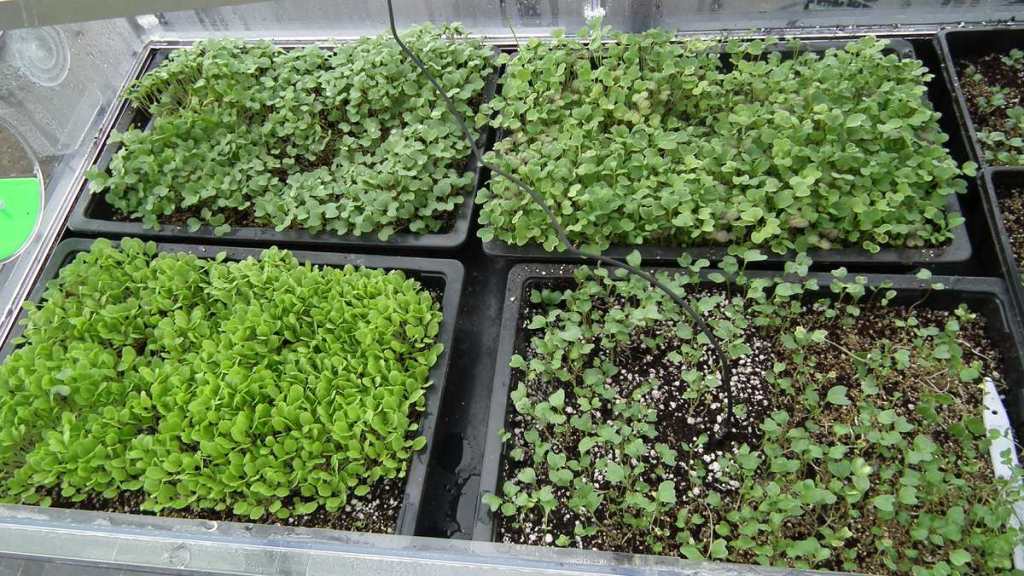
- Soak seeds 6-8 hours, or according to package directions.
- Soak the growing mat with water, and place in a container or baking dish.
- Spread out the seeds.
- Cover and place near a window until the seeds sprout.
- Remove lid and let grow until vibrant leaves appear.
- Water daily.
Are Microgreens Actually Healthy?
Research has indicated that microgreens contain up to 40% more phytochemicals (beneficial nutrients and components) than their full-grown counterparts.
Though small in stature, they contain extremely high levels of powerful vitamins, minerals, and health-supporting components.
Are Microgreens Better For You Than Vegetables?
Sprouted seeds and microgreens are often considered more nutrient-dense than ungerminated seeds or mature vegetables.
What Is The Most Popular Microgreen?
Pea shoots are among the most popular microgreens thanks to their delicate appearance and subtle flavor.
Many also appreciate that pea shoots are affordable, making them an easy addition to any dish. They’re full of folic acid and antioxidants, as well as vitamins A and C.
Which Are Healthier Microgreens Or Sprouts?
Sprouts are effective in antioxidant capacity as a result of a high content of polyphenols and L-ascorbic acid. Sprouts are also better sources of amino acids, pectins and sugars than microgreens.
Are Microgreens Anti-Inflammatory?
Studies have shown that microgreens have anti-inflammatory, anti-cancer, anti-bacterial, and anti-hyperglycemia properties, making it a new functional food beneficial to human health.
Why Do Chefs Like Microgreens?
Chefs are using microgreens to add variety and interest to their dishes. A celery microgreen, for example, is known to have a sharper, crisper flavour than its conventional equivalent.
Chefs also use microgreens to balance the surrounding food’s flavour, texture, and colour.
What Is The Most Nutrient Rich Microgreen?
Broccoli microgreens have the most complete nutrient profile of any vegetable. It is packed with Vitamin A, B, C and K, and contains a sizeable amount of iron, magnesium and phosphorus.
What Is The Healthiest Microgreen To Eat?
Broccoli microgreens are considered to be the most nutrient-rich of all microgreens. They have a high amount of sulforaphane, which is known for its cancer-fighting properties.
What Is The Lifespan Of Microgreen?
Generally that would be 14 days. As fresh-cut products, microgreens are characterized by a relatively short shelf-life, not usually exceeding 10–14 days.
Final Thoughts
With Microgreens gaining popularity as a superfood, more and more people are growing them at home.
They’re ideal for you if you are struggling with time and space for your garden but want to start eating healthier.
Please comment or follow the links, have a great day.
Sources and other reading:
What Are Some Meat Alternatives?
Please also visit our YouTube channel.
Please visit and follow our Instagram page.
If you enjoy the free content, please consider donating to help support the site.
 Happy Hub
Used to grow sprouts and I would love to grow microgreens.
LikeLiked by 1 person
Oh really, cool, did you find it easy to do? I’ve been becoming interested in the microgreens myself the last few months, a friend was growing.
LikeLiked by 1 person
It was really easy to grow the sprouts. They are a powerhouse of nutrition.
LikeLiked by 1 person
I LOVE microgreens. They are my absolute favorite. I’m having some today in my morning smoothie. 🙂
LikeLiked by 1 person
Thanks for that, I will look into it more, and you made me want to buy some to eat this week.
LikeLiked by 1 person
Hello, oh great, such a good sounding way to consume them…I’ve only ever put “green powder” in my smoothies, but will try that now thanks ! 🙂
LikeLike
👍🏻
LikeLike