Understanding emotions can help us become more empathetic and can help establish a sense of trust with others.
It’s a skill that can also benefit our own mental well-being.
Emotions motivate us to make difficult decisions, and allow us to lead purposeful lives.
But where did they come from, and do they still serve us as they once did?
Let’s talk about the origin emotions.
The Origin Of Emotions
What Is The Origin Of Human Emotions?
In evolutionary terms, emotions are adaptive responses to the environment that increase our chance of survival.
But unlike simple adaptations like the sensation of pain when our hand touches a hot stove motivating us to withdraw it, emotions are much more complex.
What Emotions Are Evolutionary?
There are thought to be seven universal basic emotions (fear, anger, surprise, sadness, happiness, contempt, and disgust).
Evolved emotions are larger in number, they include emotions like love, gratitude, guilt, and jealousy.
What Is The Main Purpose Of Emotions In Human Beings?
At a basic level, emotions prepare the body for immediate action.
Emotions activate certain systems while deactivating others in order to prevent the chaos of competing systems operating at the same time, allowing for a coordinated response to environmental stimuli.
What Do Evolutionary Psychologists Believe About The Nature Of Emotions?
In 1873 Charles Darwin argued that human emotional expressions probably evolved in the same way as physical features such as opposable thumbs or upright posture.
He presumed emotional expressions served the quite useful function of communicating with other members of one’s own species.
While Darwin proposed that facial expressions of emotion are universal, he also proposed that gestures are culture-specific, which has proven to be correct.
What Is The Origin Of Emotions In The Brain?
Emotions arise from activations of specialized neuronal populations in several parts of the cerebral cortex.
More specifically this includes the anterior cingulate, insula, ventromedial prefrontal, and subcortical structures, such as the amygdala, ventral striatum, putamen, caudate nucleus, and ventral tegmental area.
Do All Emotions Come From Thoughts?
Not necessarily, at least not always conscious thoughts. Emotions can occur unconsciously and mostly happen before the thought or feeling.
A thought can be considered something that we do in our mind, consciously, subconsciously, or unconsciously.
What Is The Oldest Emotion?
The oldest and strongest emotion of mankind is said to be fear, and the oldest and strongest kind of fear is thought to be the fear of the unknown.
Fear is said to be the most primitive, as it originates from our early reptilian brain.
Did Early Humans Have Feelings?
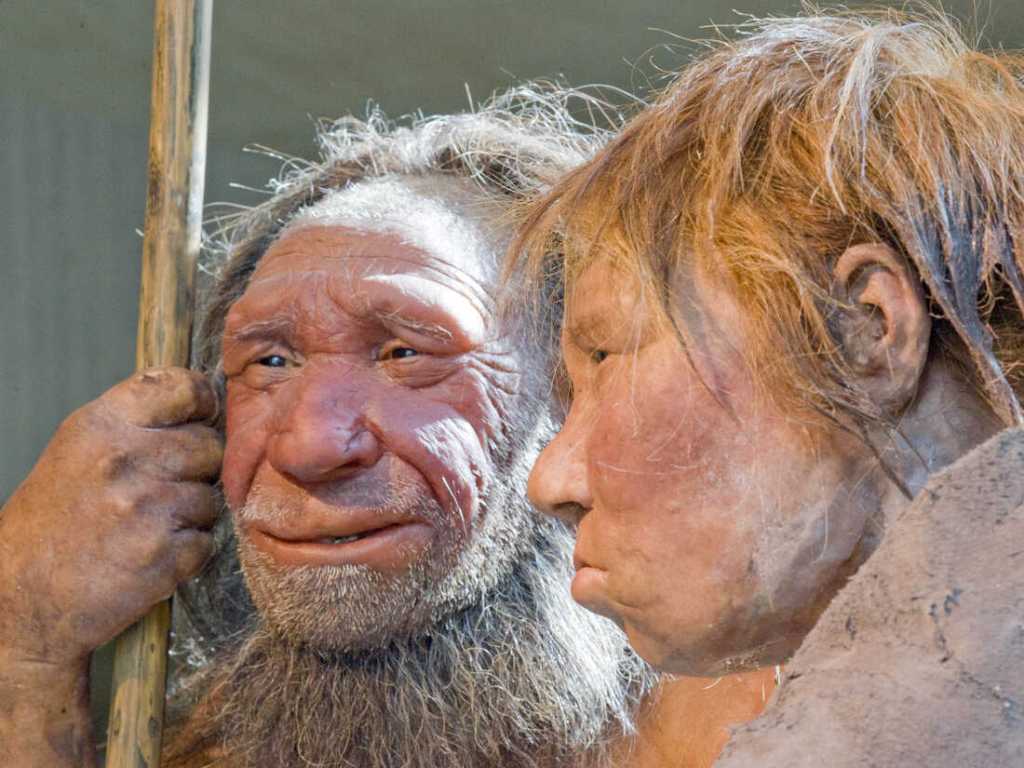
Recent research by archaeologists in the U.K. suggests that Neanderthals contradict their primitive reputation and had a deep sense of compassion.
Neanderthals and modern humans both belong to the same genus (Homo) and inhabited the same geographic areas in western Asia for about 30,000–50,000 years. Genetic evidence indicates they interbred with modern humans.
What Are The Strongest Emotions?
- Fear.
- Anger.
- Sorrow.
- Joy.
Do Animals Have Emotions?
Most scientists agree that animals are conscious beings that experience various degrees of emotional responses.
While there’s still more research to be done concerning animal emotions, evidence exists that they experience feelings much like we do.
Final Thoughts
Emotions help us communicate with each other, like when we feel sad and need help.
They also help us act quickly in important situations where we don’t have time to weigh out our options logically.
Unfortunately, a common issue many of us have is an inability or unwillingness to appropriately address our powerful emotions.
Learning coping techniques or just learning from our past mistakes can help us to better deal with our negative emotions in the future.
Thanks for reading, please follow the links or leave a comment.
Sources and other reading:
What Is Emotional Intelligence?
Visit our YouTube channel.
Please visit and follow our Instagram page.
If you enjoy the free content, please consider donating to help support the site.
 Happy Hub
I very much enjoyed reading this insightful and interesting post.
LikeLiked by 1 person
Thanks, really appreciate it.
LikeLiked by 1 person
Thank you for following my blog. You have a nice site here🥰
LikeLiked by 1 person
Thanks for the very nice compliment, same to you, and I look forward to reading some more of your posts. 🙂
LikeLiked by 1 person
Thank you kindly, you can explore the older ones🥰
LikeLiked by 1 person