Buddhism is one of the world’s oldest spiritual traditions.
It offers a profound and insightful path towards understanding the nature of existence and finding lasting happiness.
Rooted in the teachings of Siddhartha Gautama, known as the Buddha, this ancient philosophy has evolved into various schools and traditions.
Let’s discuss the basics of Buddhism to gain a foundational understanding of its core principles.
Learning About Buddhism
What Is The Goal Of Buddhism?
In my opinion sometimes words don’t always convey certain concepts perfectly, but essentially we can say the goal of Buddhism is to become enlightened and reach nirvana.
Nirvana is believed to be attainable only with the elimination of all greed, hatred, and ignorance within a person.
Nirvana signifies the end of the cycle of death and rebirth.
Is Buddhism A Religion?
While Buddhism is a tradition focused on spiritual liberation, it is not a theistic religion.
The Buddha himself rejected the idea of a creator god, and Buddhist philosophers have even argued that belief in an eternal god is nothing but a distraction for humans seeking enlightenment.
As a non-theistic faith with no god or deity to worship, some scholars describe Buddhism as a philosophy or a moral code rather than an organized religion.
Many of the beliefs and practices of Buddhism revolve around the concept of suffering and its causes.
Who Do Buddhists Worship?
Buddhists do not believe in a god as we would consider the concept in Western society. They see Buddha as a man who once lived and became enlightened.
They worship him as a sign of respect and devotion to his teachings. Buddhists believe that worship is important.
Who Was The Original Buddha?
Siddhartha Gautama, known as the founder of Buddhism, who later became known as “the Buddha,” lived during the 5th century B.C.
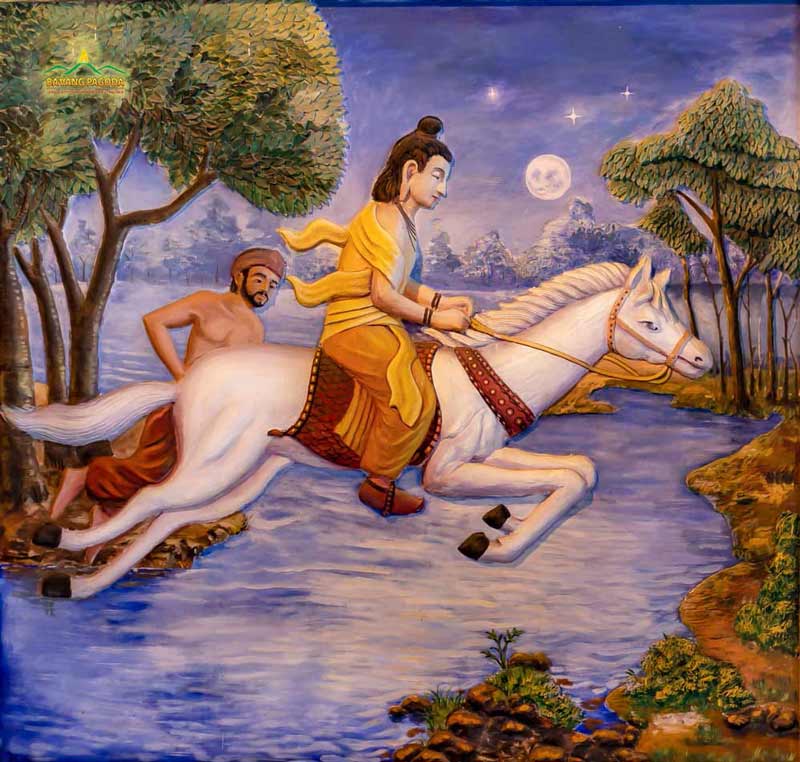
Gautama was born into a wealthy family as a prince in present-day Nepal. Although he had an easy life, Gautama was moved by suffering in the world.
According to legend, this Hindu prince who renounced his position and wealth to seek enlightenment as a spiritual ascetic, attained his goal and, in preaching his path to others, founded Buddhism in India.
Do Buddhists Believe In An Afterlife?
Generally, Buddhist teaching views life and death as a continuum, believing that consciousness, or spirit, continues after death and may be reborn.
Death itself can be an opportunity for liberation from the cycle of life, death and rebirth.
What Is The Buddhist Way Of Life?
Buddhism looks at life in an objective and realistic way, with neither optimism nor pessimism.
It needs only a little reflection to realize that life for the majority is a continuous struggle for survival.
The word dukkha means much more than the English word ‘suffering’ but is the closest translation.
The Four Noble Truths
At the heart of Buddhism lies the Four Noble Truths, a fundamental framework that encapsulates the essence of the Buddha’s teachings.
Dukkha (Suffering): Acknowledges the inherent dissatisfaction and suffering that is an integral part of human existence.
Samudaya (Origin of Suffering): Identifies craving and attachment as the root causes of suffering.
Nirodha (Cessation of Suffering): Posits that the cessation of suffering is attainable by eliminating craving and attachment.
Magga (Path to the Cessation of Suffering): Introduces the Noble Eightfold Path as the guide to achieving liberation from suffering.
The Noble Eightfold Path
The Noble Eightfold Path outlines the ethical and mental guidelines for leading a wholesome and purposeful life.
These eight aspects are interconnected and aim to cultivate wisdom, ethical conduct, and mental discipline in practitioners.
It consists of:
- Right Understanding.
- Right Intention.
- Right Speech.
- Right Action.
- Right Livelihood.
- Right Effort.
- Right Mindfulness.
- Right Concentration.
Mindfulness Meditation
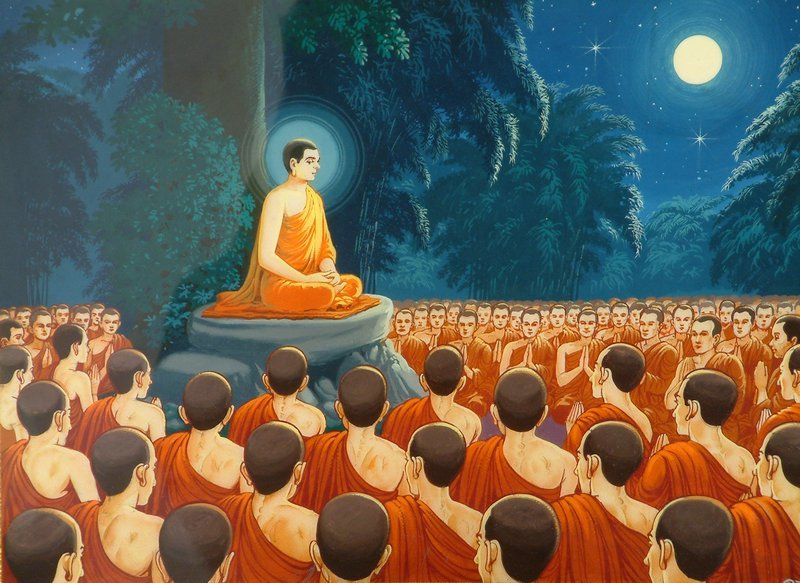
Central to Buddhist practice is mindfulness meditation. Mindfulness involves paying attention to the present moment without judgment.
Through meditation, practitioners aim to develop a heightened awareness of their thoughts, emotions, and bodily sensations, fostering a deep understanding of the nature of the mind.
Karma and Rebirth
Buddhism introduces the concept of karma, which refers to the law of cause and effect.
Actions, thoughts, and intentions have consequences that shape one’s present and future experiences.
Rebirth, not to be confused with reincarnation, suggests the continuity of consciousness from one life to another based on accumulated karma.
Final Thoughts
The basics of Buddhism provide us a roadmap for those of us seeking a path of self-discovery, inner peace, and liberation from suffering.
By embracing the Four Noble Truths, following the Noble Eightfold Path, and cultivating mindfulness, we can embark on a transformative journey.
It’s a journey that leads toward understanding the true nature of reality and achieving a lasting sense of serenity, or dare we say, what we might call happiness.
Forgive me if I’ve left anything out, or if you find any inaccuracies, please let me know below.
Thanks for reading, please comment or follow the links.
Sources and other reading:
Please visit and follow our Instagram page.
If you enjoy the free content, please consider donating to help support the site.
 Happy Hub
BEAUTIFUL 💖
LikeLike