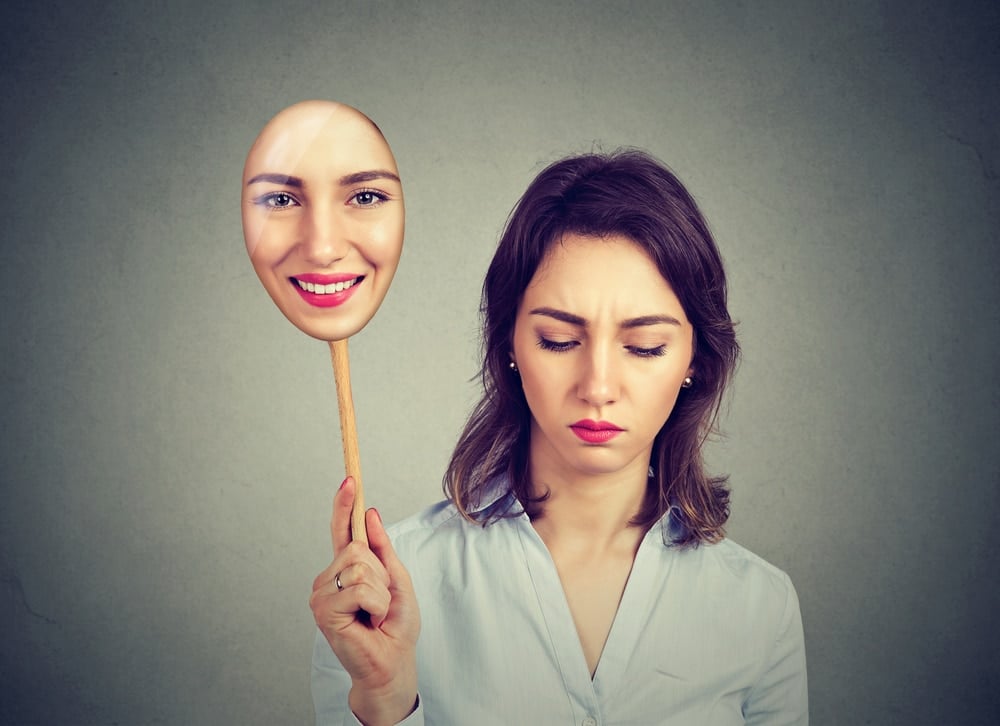
In a society that often values positivity and optimism, the pressure to appear happy can sometimes lead us to put on a facade of joy, concealing our true emotions beneath a fake smile.
While faking happiness might sound like a coping mechanism or just conforming to a societal expectation, it’s important to recognize the potential consequences that come from it.
Pretending to be happy may provide a short-term solution to a depressive mood, but the long-term effects can be damaging to both mental and physical health.
Let’s talk about faking happiness.
Is It Ok To Fake Happiness?
Am I Actually Happy Or Am I Faking It?
Happiness can be highly subjective, making it one of the most nuanced and complex intangible emotions that we can experience.
But if you find yourself living or acting a certain way just to please other people without thought to your own goals, preferences, and behaviours, you might be faking your own happiness.
Can You Fake Yourself Happy?
Forcing a smile, acting extroverted, or repeating positive mantras can shift our internal experiences for the better.
But there are limits to this fake happiness effect, and it’s good to know when it’s ok to put on a show and when it’s time to be real about your feelings.

Why Should I Stop Faking Happiness?
- You can only pretend to be happy for so long.
- Talking it out is better than hiding your emotions.
- Suppressing your emotion makes you exhausted.
- Remember honest and healthy expressions should be a priority.
What’s Wrong With Faking Happiness?
The habit of faking happiness can often hinder authentic connections with others. Meaningful relationships thrive on honesty and vulnerability, and pretending to be happy all the time can prevent us from forming genuine connections with those around us.
The emotional distance can contribute to a sense of loneliness and a lack of understanding from friends and loved ones. It’s important to acknowledge that experiencing a range of emotions, including sadness, frustration, or disappointment, is a natural part of the human experience.
Embracing our own authentic emotions allows for personal growth and a deeper understanding of oneself. Seeking out support from friends, family, or mental health professionals can provide a healthier outlet for expressing and navigating challenging emotions.
Final Thoughts
If you feel that you’re consistently forcing yourself to appear productive and content, it can be important to remember you’re not alone.
Sometimes obviously there will be times where we all must show pleasantries and be easy to get along with contrary to how we may feel inside.
But in general, breaking free from the pressure to always fake happiness can lead to a more authentic and fulfilling life, fostering genuine connections and emotional well-being.
We can say that true happiness comes from embracing and understanding both the highs and lows of life.
Thanks for reading, please comment or follow the links.
Sources and other reading:
The Factors That Influence Happiness
Please visit and follow our Instagram page.
If you enjoy the free content, please consider donating to help support the site.
 Happy Hub
2 thoughts on “Is It Ok To Fake Happiness?”