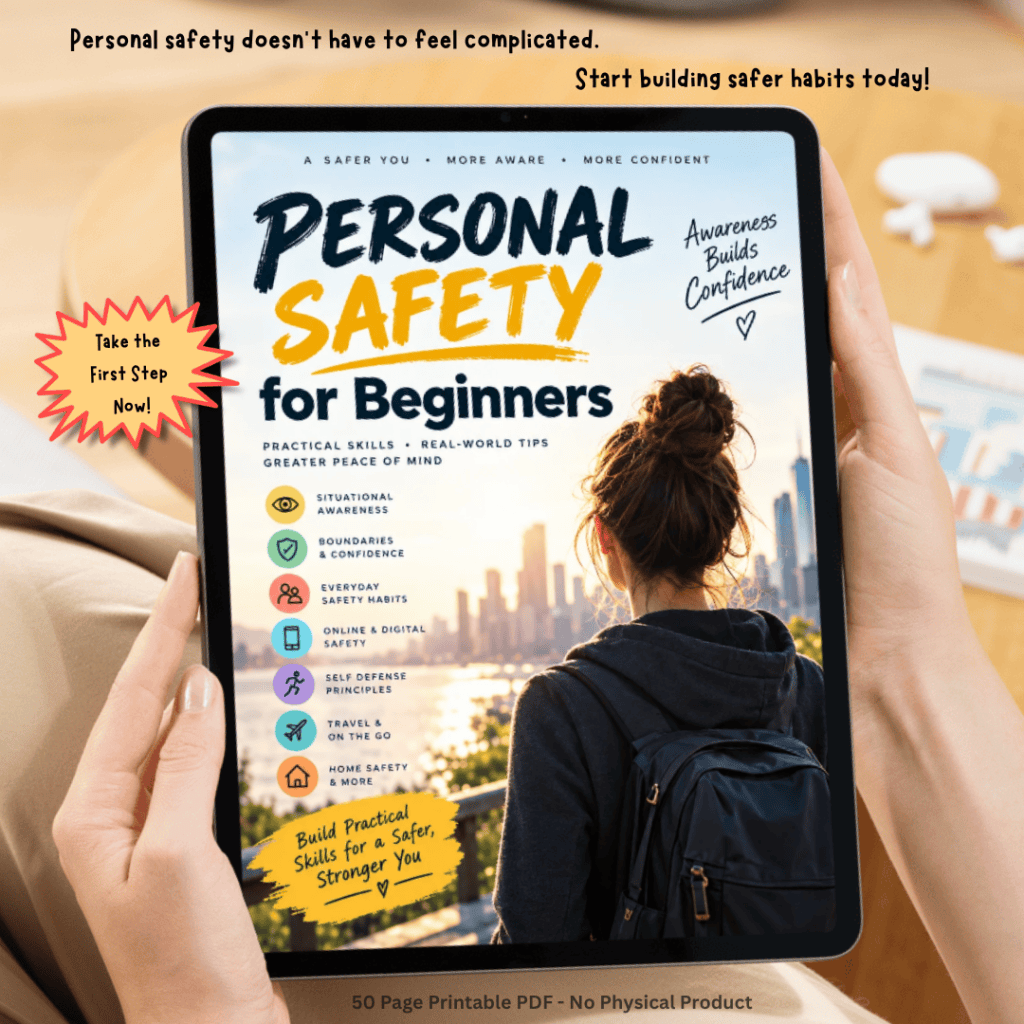
When people think about personal safety, they often focus on self-defense tools or emergency responses.
Yet one of the most effective safety skills requires no equipment at all: situational awareness.
Situational awareness is simply the ability to stay present, observe your surroundings, and recognize potential issues before they become problems. It’s not about being fearful or suspicious, it’s simply about being attentive.
The good news is situational awareness is a skill anyone can develop. Let’s discuss.
Situational Awareness: Staying Safe
What Is Situational Awareness?
Situational awareness simply means being aware of what’s happening around you in real time.
It involves:
- Observing your environment
- Noticing unusual behaviour
- Identifying exits and safe areas
- Paying attention to changes around you
- Reducing unnecessary distractions
- Recognizing how situations are developing
The earlier you notice something unusual, the more options you have to respond, avoid risk, or make better decisions.
The Danger of Living on Autopilot
Many people go through their day without fully paying attention to their surroundings. Phones, headphones, conversations, and daily routines can easily pull our focus away from what’s happening around us.
Common awareness obstacles include:
- Looking at your phone while walking
- Wearing headphones at high volume
- Daydreaming in unfamiliar places
- Becoming overly absorbed in conversations
- Rushing from place to place
You don’t need to eliminate distractions completely. The goal is simply to avoid becoming so distracted that you miss important information around you.

Build the Habit of Observation
One of the easiest ways to improve situational awareness is to observe your surroundings whenever you enter a new environment.
Take a few seconds to notice:
- Entrances and exits
- Areas with larger groups of people
- Poorly lit locations
- Security personnel or cameras
- Abnormal behaviour
- Potential hazards or obstacles
The key is quiet observation. Highly aware people often appear calm and relaxed because awareness is about paying attention, not appearing nervous.
Pay Attention to Behaviour, Not Assumptions
Most people you encounter are harmless. Situational awareness is not about assuming bad intentions; it’s about noticing behaviour.
Examples of behaviours worth paying attention to include:
- Someone repeatedly watching you
- Unnecessary invasion of personal space
- Aggressive or unpredictable actions
- Attempts to distract you
- Someone following unusually close behind
- Escalating arguments nearby
If something feels uncomfortable, creating distance is often a simple and effective safety strategy.
The Power of the “Head Up” Habit
A surprisingly effective awareness technique is keeping your head up and occasionally scanning your surroundings.
Simple habits include:
- Looking around while walking
- Limiting phone use in public
- Making brief eye contact when appropriate
- Noticing who is nearby
- Identifying exits and entry points
People who appear alert and aware often project greater confidence and preparedness.
Practice Situational Awareness Every Day
Like any skill, awareness improves with repetition. Try these simple exercises:
1. Identify Exits
Whenever you enter a building, casually note the nearest exits.
2. Reduce Distractions
Spend short periods walking without checking your phone.
3. Conduct Mental Check-Ins
Ask yourself:
- Who is around me?
- What is happening nearby?
- Where could I go if I needed help?
4. Notice Changes
Pay attention to sudden shifts in noise levels, behaviour, or movement around you.
These exercises take only seconds but help train your awareness over time.

Final Thoughts
Situational awareness isn’t about living in fear or constantly expecting danger. It is about moving through life with greater attention, confidence, and preparation.
Small improvements in awareness can help us recognize risks earlier, avoid unnecessary problems, and feel more in control of our environment.
The goal isn’t hyper-vigilance or paranoia, it’s just being more present.
In many situations, our best safety tool is simply noticing what’s happening before everyone else does.
What do you think?
Please follow the links or leave a comment if you wish, I’d love to hear your thoughts. Thanks for reading!
What Our Body Language Reveals
Free PDF – Positive Affirmations Motivational Guidebook
Please visit and follow Happy Hub’s Instagram page.
Check out the Happy Hub YouTube Channel.
Check out the Happy Hub Etsy Shop.