The Stoics believed it’s not what happens that’s important, it’s how we respond to what happens that’s more important.
We may not control the outside world, but we can control what we do in reaction to the outside world.
What Is Stoicism?
What Is Stoicism In Simple Terms?
Stoicism is a school of philosophy that originates from ancient Greece and Rome in the early parts of the 3rd century, BC. It’s a philosophy of life that maximizes positive emotions, reduces negative emotions, and helps individuals to improve their virtues of character.
The goal of Stoicism is to attain inner peace by overcoming adversity, practicing self-control, being conscious of our impulses, realizing the transitory nature of our lives and allowing us to live with our nature and not against it.
What Is A Stoic Mindset?
It can be said that Stoicism is a mindset based on a set of observations about how the mind works. The Stoics argued that your thoughts and beliefs create the world you inhabit, not external circumstances, so you need to take responsibility for your mind.
Who Is The Most Famous Stoic?
Roman Emperor Marcus Aurelius, born nearly two thousand years ago, is maybe the best known Stoic leader in history. He was born to a prominent family but nobody at the time would have predicted that he would one day be Emperor of the Empire.
Who Were The Major Stoics?
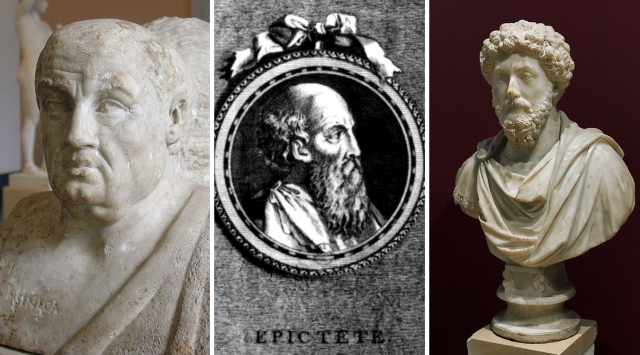
The best-known Stoics are:
Marcus Aurelius, a Roman emperor.
Epictetus, a former slave who triumphed to become an influential lecturer and friend of the emperor Hadrian.
Seneca, a famous playwright, and political adviser.
Zeno, who was known as the founder of the Stoic school of philosophy, which he taught in Athens from about 300 BC.
What Are 4 Toxic Habits Stoics Avoid?
- Don’t go along just to get along. (Agrippinus)
- Don’t be all about business. (Marcus Aurelius)
- Don’t put off to tomorrow what can be finished today. (Seneca)
- Don’t shun people you disagree with. (Seneca)
What Are the Four Virtues of Stoicism?
The four virtues of Stoicism are:
- Wisdom.
- Courage.
- Temperance. (Moderation)
- Justice.
What Is A Golden Rule Of Stoicism?
One golden rule of Stoicism can be said to Treat others as you would like to be treated by them. It’s one of the simplest and most influential of all ethical principles.
Do Stoic People Get Angry?
To the Stoics, anger is an emotion that erodes the fabric of who we are, making us behave in ways that don’t align with our values, morals, and beliefs. Anger pushes us away from the person we want to be and the life we want to lead.
What Do Stoics say About Anxiety?
“No one confines his unhappiness to the present.” – Seneca
If we continually work to bring our thoughts to the present moment, increasing our mindfulness, we will find unhappiness and anxiety are impossibilities.
Is Stoicism Equal To Emotional Intelligence?
An extension of emotional intelligence is stoicism and is defined as the ability to endure pain or hardship without complaints or any display of feelings.
It’s the key to handling relationships well and in many ways unlocks the door to all success.
Is Stoicism Against Christianity?
Stoicism is not connected to Christianity. Although Stoicism refers to gods, it’s a philosophical doctrine without religion.
Best Stoic Quotes
“You could leave life right now. Let that determine what you do and say and think.” Marcus Aurelius
“Life is very short and anxious for those who forget the past, neglect the present, and fear the future.” Seneca
“You have power over your mind — not outside events. Realize this, and you will find strength.” Marcus Aurelius
“Begin at once to live and count each separate day as a separate life.” Seneca
“The key is to keep company only with people who uplift you, whose presence calls forth your best.” Epictetus
“The happiness of your life depends upon the quality of your thoughts.” Marcus Aurelius
Ancient Stoic Tenets To Keep In Mind Today
Each day we can show patience, courage, humility, resourcefulness, reason, justice, and creativity.
The things in life that test us are what make us who we are. The Stoic grows stronger and better through every obstacle they face. They dig deep to rally to every challenge, and thrive as a result.
Are Stoics Introverts?
Many may view Stoicism as primarily appealing to introverts, but it can also be compatible with extroversion.
Stoicism teaches us to strive for self-control, which can be beneficial for extroverts who might struggle with impulsivity and a lack of self-regulation.
Final Thoughts
Stoicism states that we can only rely on our responses to outside events, while the events themselves we can’t control.
Our anxiety isn’t being caused by external events, but our own response to those events.
Please comment or follow the links, thanks for reading.
Sources and other reading:
Visit our YouTube channel.
Please visit and follow our Instagram page.
If you enjoy the free content, please consider donating to help support the site.
 Happy Hub
Great article. Thanks. I’d highly recommend reading seneca’s letters for anyone interested in further learning. Marcus and Epictetus are also good reads.
LikeLiked by 1 person
Thanks a lot, great recommendations, appreciate that.
LikeLike