Some ideas sound like they belong firmly in science fiction: travelling through time, stepping into a parallel universe, or taking a shortcut through the fabric of space itself. But every so often, science comes along and says something surprising: Well… maybe.
That doesn’t mean these ideas are proven. In some cases, we have no evidence that they exist at all. But they aren’t necessarily forbidden by the laws of physics either.
Let’s discuss a few strange possibilities that have a legitimate basis in science.
What If It’s Possible?
Time Travel
Time travel is probably the ultimate example. And surprisingly, travelling into the future is already scientifically real.
According to Einstein’s theory of relativity, time doesn’t pass at exactly the same rate for everyone. The faster you travel, the more slowly time passes for you compared with someone who stays behind. Gravity can also affect the passage of time. These effects have actually been measured using very precise clocks.
So, in theory, if you could travel extremely close to the speed of light and then return, much more time could have passed on Earth than for you. You’d effectively have travelled into Earth’s future.
Going backward in time is much stranger. Certain mathematical solutions in relativity allow possibilities involving things like wormholes and loops in spacetime. We have no idea whether these could actually exist, but physics hasn’t completely ruled them out.

Parallel Universes
What if our universe isn’t the only one?
The idea of parallel universes isn’t just something dreamed up for science fiction. Some serious interpretations of quantum mechanics, particularly the Many-Worlds Interpretation, suggest that different possible outcomes of quantum events could correspond to different branches of reality.
Imagine the universe reaching a fork in the road. In one version, something happens; in another, it doesn’t. The idea is that both possibilities might continue to exist in their own branches.
There is currently no direct evidence that we can observe another universe, and physicists don’t agree that the Many-Worlds Interpretation is correct. Still, the idea comes from attempts to explain real quantum physics.
Wormholes
If you could fold a piece of paper in half and poke a hole through two distant points, you’d have a rough visual for what a wormhole is supposed to do.
A wormhole would essentially be a shortcut through spacetime, potentially connecting two extremely distant locations. The idea comes from Einstein’s general theory of relativity, which allows mathematical models containing these strange structures.
The catch? We have never found a wormhole, and keeping one open would appear to be a problem on its own. So don’t expect one to open up behind your house anytime soon.
At this point, they are considered possible mathematical solutions, we just don’t know whether nature actually makes them.
Life Beyond Earth
This one might sound less crazy than the others, because it’s actually a perfectly respectable scientific possibility.
We now know that planets are incredibly common. Thousands have been discovered outside our solar system, including some that are roughly Earth-sized. Scientists have also found potentially habitable environments elsewhere in our own solar system.
None of this proves that aliens exist. We haven’t found confirmed extraterrestrial life.
But considering the massive size of the universe, and how surprisingly adaptable life on Earth is, the possibility that life emerged somewhere else is hardly unreasonable. The really interesting question is whether that life would be microscopic, intelligent, or something completely different from anything we’ve encountered.
Are We Living in a Simulation?
Finally, there’s the idea that our entire reality could be a simulation.
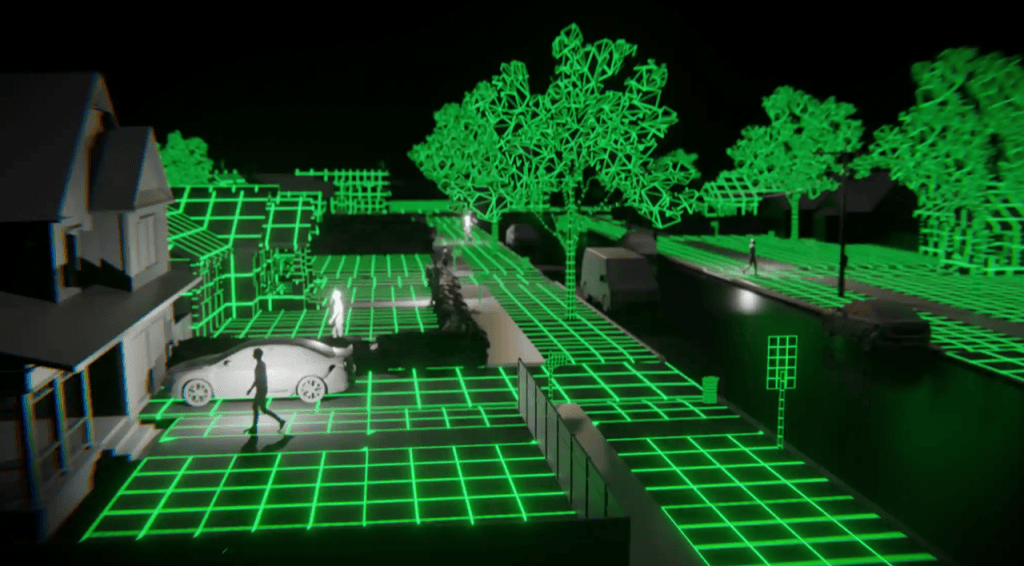
The simulation hypothesis is more of a philosophical argument than a scientific theory. The basic idea is that if an advanced civilization could eventually create incredibly realistic simulated worlds containing conscious beings, perhaps there could eventually be more simulated realities than “original” ones.
There’s currently no convincing evidence that we’re living in a simulation, and it’s difficult to even establish what evidence would prove it.
Still, it raises a fascinating question: If reality were a perfect simulation, would we even know?
(Nick Bostrom — The Simulation Argument)
Once Considered Impossible
History has a funny way of changing our definition of “impossible.” Some things that once sounded completely ridiculous eventually became ordinary parts of life:
- Human flight: For centuries, powered flight was fantasy. The Wright brothers changed that in 1903.
- Going to the Moon: For most of history, the Moon was something to look at, not somewhere humans could visit. In 1969, people walked on it.
- Instant global communication: Sending a message across an ocean in seconds would once have seemed magical. Today, we barely think twice about it.
- Seeing inside the human body: Before X-rays, looking inside someone without surgery was unimaginable. Now it’s routine.
- Splitting the atom: Atoms were once thought to be indivisible. We eventually discovered they could be broken apart; and release enormous amounts of energy in doing so.
Final Thoughts
The point isn’t that every strange idea will eventually turn out to be true. Most won’t, and some may eventually prove impossible.
What’s fascinating is that our understanding of reality is constantly changing.
Ideas that sound absurd today might in fact one day be shown to be impossible, but they also might become the starting point for something completely new.
Science fiction doesn’t always predict the future. But sometimes, it asks questions that turn out to be a lot less crazy than they first sounded.
What do you think? Thanks for reading.
Earth Mysteries Solved by Science
Check out the Healthy Lifestyle Tracker – Free Download
Visit Happy Hub on Pinterest.
Please visit and follow Happy Hub’s Instagram page.
Check out the Happy Hub YouTube Channel.
Please visit the Happy Hub Etsy Shop.